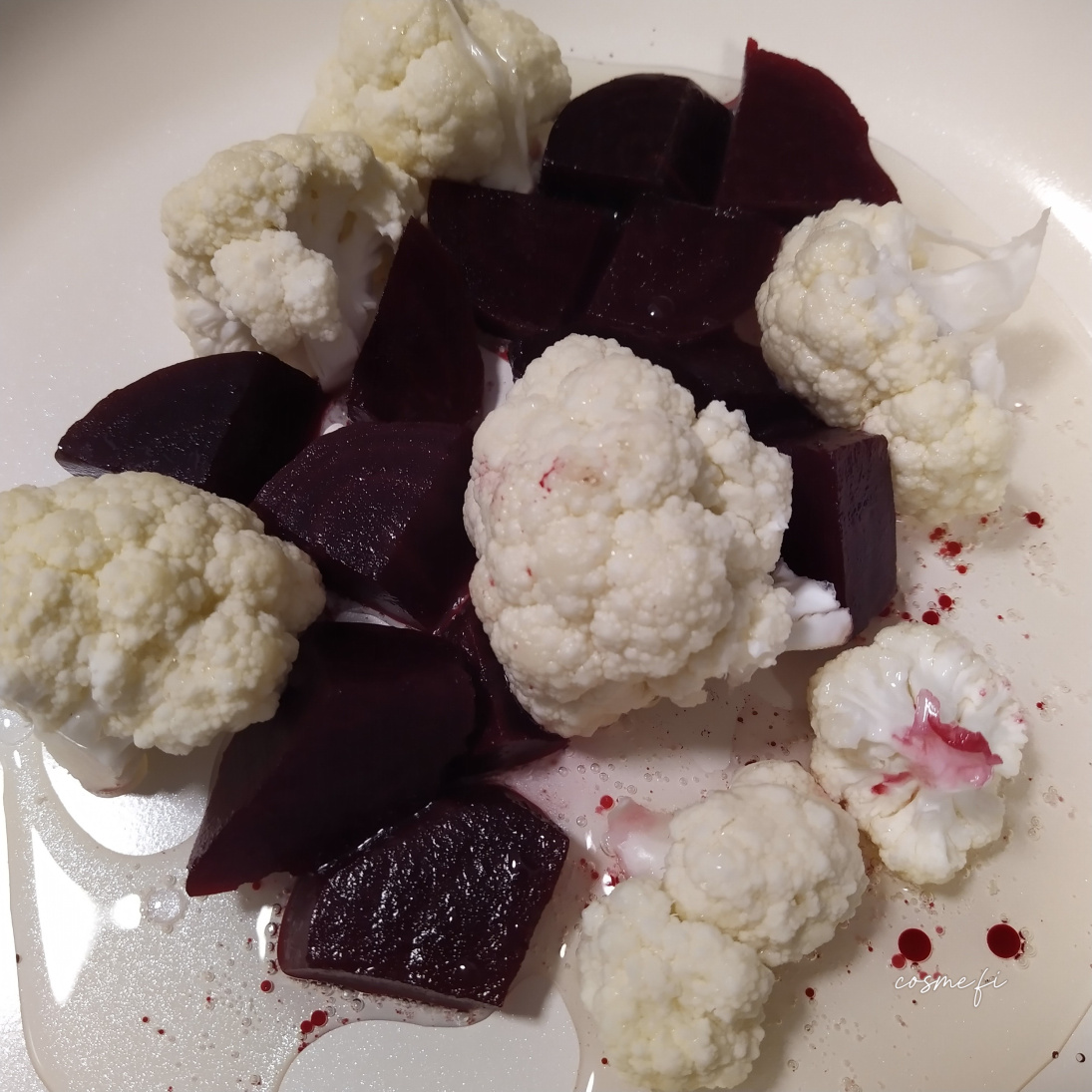
Sauté cauliflower and cooked beetroot in rapeseed oil over low heat. Season with black pepper (and salt). Bring to a boil by adding Campari.
Cauliflower is a highly nutritious vegetable. It is rich in vitamin C, vitamin K, folate, potassium, and fiber. Cauliflower is also a good source of protein.
Cauliflower is a highly nutritious vegetable. It contains a lot of vitamin C, vitamin K, and other vitamins, such as B vitamins. In addition, it is a good source of fiber and antioxidants. Cauliflower supports health in many ways, including promoting heart health and reducing inflammation.
Beetroot 100 g:
Nutrient Target
Energy kcal 44.5 kcal 2 %
Energy kJ 186.1 kJ
Fat 0.1g 0%
Polyunsaturated 0.2g 1%
Carbohydrate 8.0g 3%
Sugar 7.9g 16%
Protein 1.4g 1%
Fibre 2.5g 10%
Organic acids 0.2 g
Vitamin Objective
Vitamin A (RAE) 0.6 μg 0%
Riboflavin (B2) 0.1 mg 4 %
Vitamin B6 0.1mg 4%
Vitamin C 3.0mg 4%
Vitamin E 0.1 mg 1%
Folate (vitamin B9) 150.0 μg 50%
Niacin (Vitamin B3) 0.2mg 1%
Mineral or trace element Objective
Phosphorus (P) 32,0 mg 5 %
Iodine (I) 1.0 μg 1 %
Potassium (K) 320.0 mg 10 %
Calcium (Ca) 11.0 mg 1 %
Copper (Cu) 0.1 mg 7 %
Magnesium (Mg) 15.0mg 5%
Sodium (Na) 18.0 mg
Iron (Fe) 0.3 mg 2%
Selenium (Se) 10,0 μg 20 %
Zinc (Zn) 0.3 mg 4 %
Cauliflower contains a wide range of nutrients.
In terms of vitamins, it has 0.9 µg of vitamin A, 0.1 mg of thiamine (B1), 0.1 mg of riboflavin (B2), 0.2 mg of vitamin B6, 0.0 mg of vitamin B12, 51.8 mg of vitamin C, 0.0 mg of vitamin D, 0.1 g of vitamin E, 85.9 µg of folate (B9), and 0.6 mg of niacin (B3).
For minerals and trace elements, it contains 44.0 mg of phosphorus, 1.0 µg of iodine, 330.0 mg of potassium, 28.0 mg of calcium, 0.0 g of copper, 16.0 mg of magnesium, 3.4 mg of sodium, 0.5 mg of iron, 10.0 µg of selenium, and 0.3 mg of zinc.
In terms of basic nutrients, 100 grams provides 24.4 kcal (102.3 kJ) of energy, 0.2 g of fat, 0.0 g of saturated fat, 0.0 g of monounsaturated fat, 0.1 g of polyunsaturated fat, 2.4 g of carbohydrates, 2.2 g of sugar, 2.0 g of protein, 0.0 g of salt, 2.2 g of fiber, and 0.2 g of organic acids.
Beetroot is rich in nutrients and provides 44.5 kcal (186.1 kJ) per serving. It contains only 0.1 g of fat, with no saturated or monounsaturated fat, and 0.2 g of polyunsaturated fat.
There are 8.0 g of carbohydrates, of which 7.9 g are sugars, 1.4 g of protein, and no salt.
It contains 2.5 g of fiber and organic acids.
Vitamins include, among others, vitamin A 0.6 µg, vitamin B1 0.0 mg, vitamin B2 0.1 mg, vitamin B6 0.1 mg, vitamin B12 none, vitamin C 3.0 mg, vitamin D none, vitamin E 0.1 mg, folate 150.0 µg, and niacin 0.2 mg.
Minerals and trace elements in beetroot include phosphorus 32.0 mg, iodine 1.0 µg, potassium 320.0 mg, calcium 11.0 mg, copper 0.1 mg, magnesium 15.0 mg, sodium 18.0 mg, iron 0.3 mg, selenium 10.0 µg, and zinc 0.3 mg.