It is said that even athletes in ancient Greece drank celery juice to improve their performance.
Celeriac contains important dietary fibers that enhance digestion and metabolism. Like other root vegetables, it contains essential trace elements and minerals for us but only a small amount of energy.
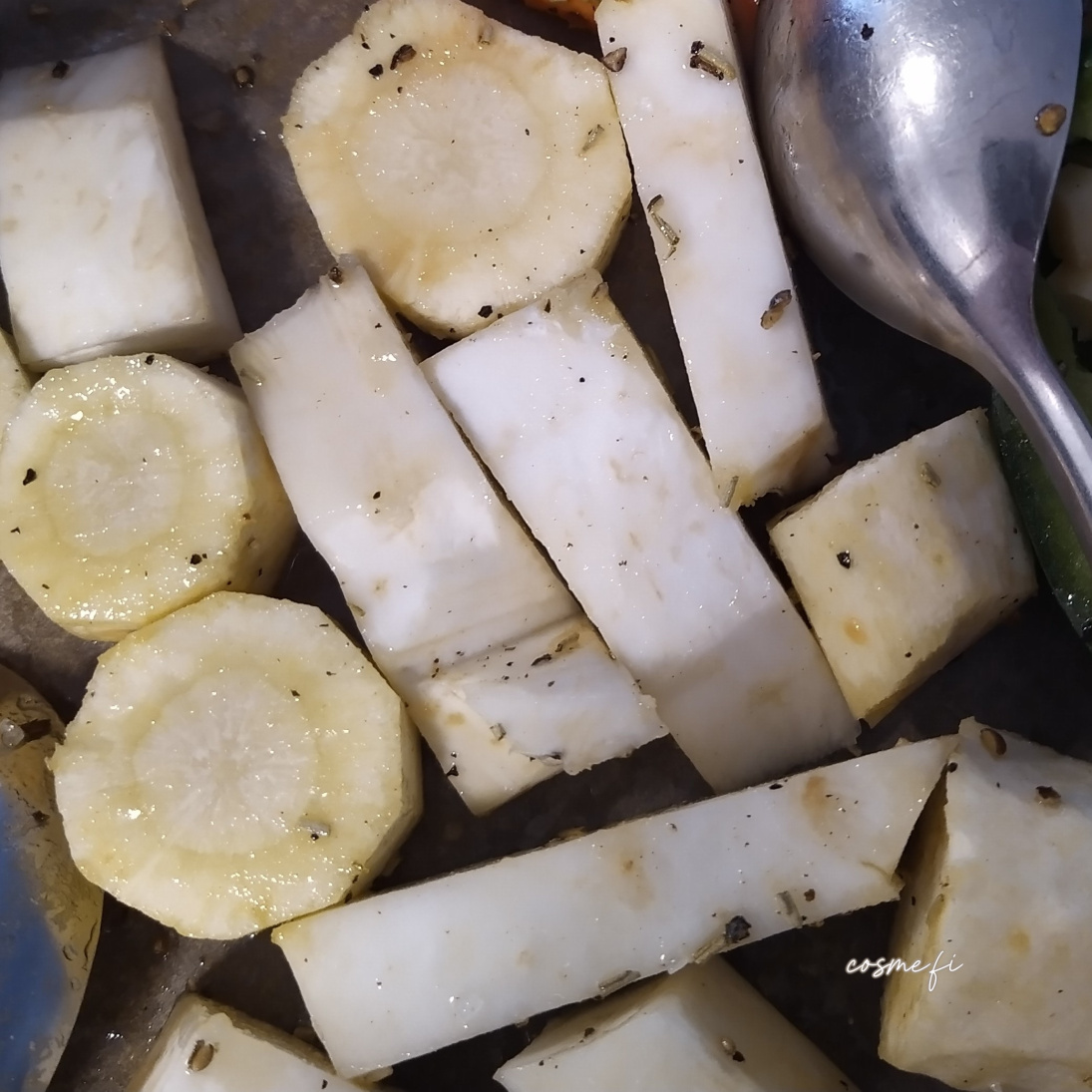
When you peel the knobby celeriac, removing the rough skin along with the side roots, a beautifully pale root is revealed. The cut surface darkens slightly, but this does not affect the taste. Once scrubbed clean and cooked, the skin can also be eaten.
Strong-flavored celeriac is a popular root for broth and soups, but it is also excellent for casseroles, stews, and purees. Celeriac adds a tasty touch to vegetable patties and is an essential part of the classic Waldorf salad. Roasted whole, the celeriac yields juicy patties.
Nutritional values of celeriac per 100 grams: Calories: 22 kcal Fat: 0 g Carbohydrates: 3 g Protein: 1 g Additionally, celeriac contains plenty of trace elements and vitamins, making it a nutritious option.
Celeriac 100 g:
Nutrient Target
Energy kcal 22.5 kcal 1 %
Energy kJ 94.1 kJ
Fat 0.1g 0%
Saturates 0.1g 0%
Polyunsaturated 0.2g 1%
Carbohydrate 2.7g 1%
Sugar 2.5g 5%
Protein 1.3g 1%
Salt 0.1g 3%
Fibre 2.9g 12%
Vitamin Objective
Thiamine (B1) 0.1 mg 9 %
Riboflavin (B2) 0.1 mg 8 %
Vitamin B6 0.2mg 17%
Vitamin C 3.3 mg 4%
Vitamin E 0.5mg 6%
Folate (vitamin B9) 51.0μg 17%
Niacin (Vitamin B3) 0.7 mg 5%
Mineral or trace element Objective
Phosphorus (P) 58.0 mg 10 %
Iodine (I) 2,0 μg 1 %
Potassium (K) 390.0 mg 13 %
Calcium (Ca) 36.0 mg 5 %
Copper (Cu) 0.1 mg 11 %
Magnesium (Mg) 8.5mg 3%
Sodium (Na) 54.0 mg
Iron (Fe) 0.3 mg 2%
Selenium (Se) 10,0 μg 20 %
Zinc (Zn) 0.3 mg 4 %