Chorizo Cabbage Soup:
Rapeseed oil, onion, leek, garlic, black pepper, bay leaf
Cooked cabbage (from own freezer)
Carrot
Potato
Crushed tomatoes, parsley
Water
Chorizo: chili - garlic - paprika
Chorizo cabbage soup
Main Page > Home Kitchen SiriSiri > Meat
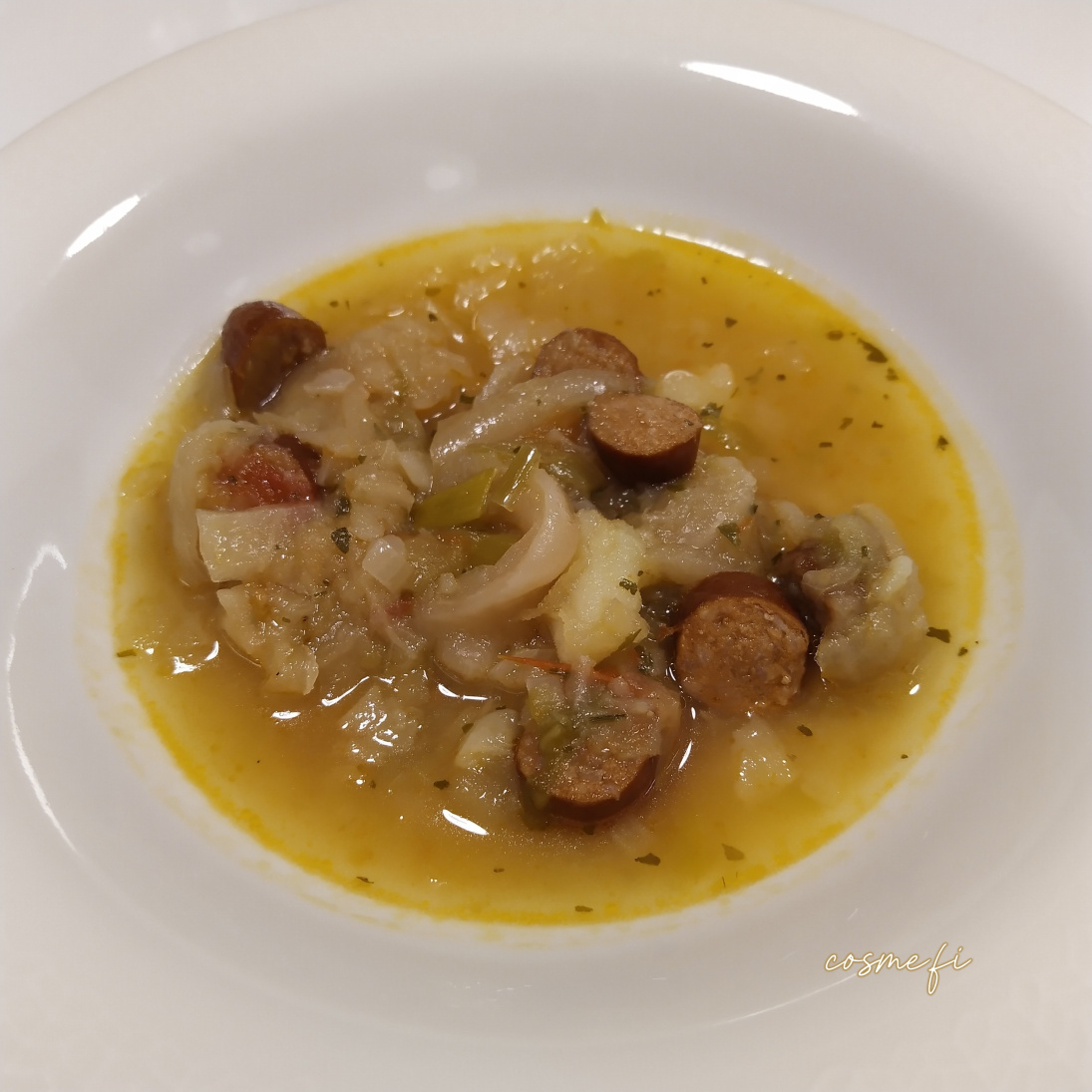
Chorizo cabbage soup.
Cabbages contain more fiber than vegetables on average. This is beneficial, among other things, for blood cholesterol and digestion. Fiber also helps to keep you feeling full longer.
Cabbages have fewer calories than, for example, many root vegetables.
On the other hand, cabbages are rich in vitamin C, more than many vegetables, and in certain cabbages even roughly the same amount or more than in oranges and kiwis, which are considered vitamin C powerhouses.
Cabbages also contain plenty of cell-protecting antioxidants – in cabbages, these are many times more than, for example, in cucumber and iceberg lettuce.
Fiber - calories - vitamin C - vitamin K - beta-carotene - folate - iron - calcium - potassium
Proteins consist of a total of 20 different amino acids, ten of which the human body cannot produce on its own and must be obtained from food. Amino acids serve as building blocks in tissue and enzyme proteins as well as in many hormones and neural transmitters. Protein contains 17 kJ (4 kcal) of energy per gram.
Excess protein is not stored, but is converted into fat in the body.
Cabbage is a nutritious vegetable that contains only 31.4 kcal (131.3 kJ) of energy per serving. It has only 0.1 g of fat and 5 g of carbohydrates, of which 4.8 g are sugars. It contains 1.2 g of protein and 2.5 g of fiber. Among vitamins, it particularly provides vitamin C at 36.8 mg (49% of the daily intake) and vitamin B6 at 0.2 mg (13%). Among minerals, notable amounts are potassium at 240 mg (8%) and selenium at 10 µg (20%), while it contains very little sodium, only 5.2 mg.

