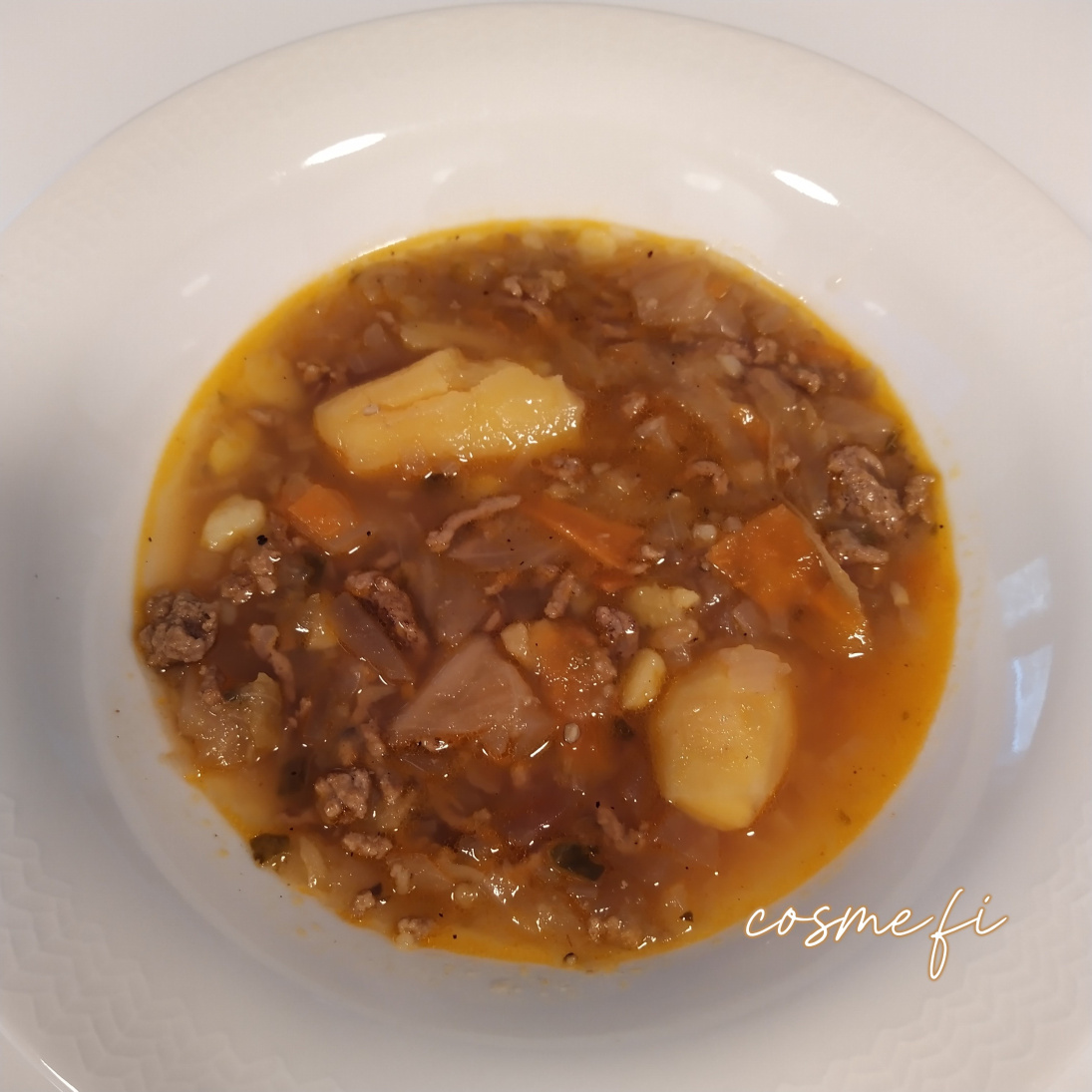
For the pot:
Rapeseed oil, yellow onion and red onion, chopped, black pepper, previously boiled and pickled beetroot, chopped cabbage seasoned with syrup cooked in the oven, chopped carrots, whole potatoes,
browned minced meat, black pepper, chili, salt.
Add water if necessary, a dash of dark rum.
Let it simmer for a while longer.
Hot tasty soup in the cold, fresh cold water for drinking, bon appetit!
Beetroot is one of those vegetables that is rich in dietary fiber, which keeps you feeling full. This is partly because it requires chewing, which activates satiety hormones, and partly because its fiber absorbs liquid and swells in the stomach, filling you up.
Fiber is good for digestion because it speeds up the natural movement of the intestines and thus helps prevent constipation. Fiber also feeds the good bacteria in the intestines, which is good for both the immune system and blood sugar balance.
Beetroot juice has been shown to protect against high blood pressure, because beetroot contains a lot of nitrate. In addition, beetroot is a good source of potassium, which also helps lower blood pressure.
Eating beetroot also provides a lot of folate, which is very important for the body's production of red blood cells. A lack of red blood cells can lead to anemia, which reduces the blood's ability to carry oxygen and makes a person tired and weak.
Beetroot, like many other vegetables, also contains a fair amount of potassium. The mineral potassium promotes cell function and the transmission of nerve impulses between them. Potassium is especially found in muscle cells, as it is important for their contraction and oxygen supply.
The nutritional values of cabbage per 100 grams are as follows:
Calories: about 25 kcal.
Vitamin C: 30-36 mg.
Potassium: about 250 mg.
Folic acid: abundant.
Vitamin K and beta-carotene: also significant amounts.
Cabbage is a good source of fiber and contains many other vitamins and minerals, such as iron and calcium.
A 100 g serving of beetroot contains 44.5 kcal (186.1 kJ) of energy, 0.1 g fat, 0.2 g polyunsaturated fat, 8.0 g carbohydrates, 7.9 g sugar, 1.4 g protein, 2.5 g fiber, and 0.2 g organic acids.
It provides 0.6 µg vitamin A, 0.1 mg riboflavin (B2), 0.1 mg vitamin B6, 3.0 mg vitamin C, 0.1 mg vitamin E, 150.0 µg folate (B9), and 0.2 mg niacin (B3).
Mineral content includes 32.0 mg phosphorus, 1.0 µg iodine, 320.0 mg potassium, 11.0 mg calcium, 0.1 mg copper, 15.0 mg magnesium, 18.0 mg sodium, 0.3 mg iron, 10.0 µg selenium, and 0.3 mg zinc.
Nutrient goals met are 2% energy, 1% polyunsaturated fat, 3% carbohydrates, 16% sugar, 1% protein, 10% fiber, 4% riboflavin, 4% vitamin B6, 4% vitamin C, 1% vitamin E, 50% folate, 1% niacin, 5% phosphorus, 1% iodine, 10% potassium, 1% calcium, 7% copper, 5% magnesium, 2% iron, 20% selenium, and 4% zinc.