When you notice that your breakfast breads have a little more salt than your body needs, choose plenty of colorful toppings and enjoy!
Plants that thrive in Finland's climate
Joy from plants
When you notice
Main Page > Home Kitchen SiriSiri > Cereal Products and Breakfast
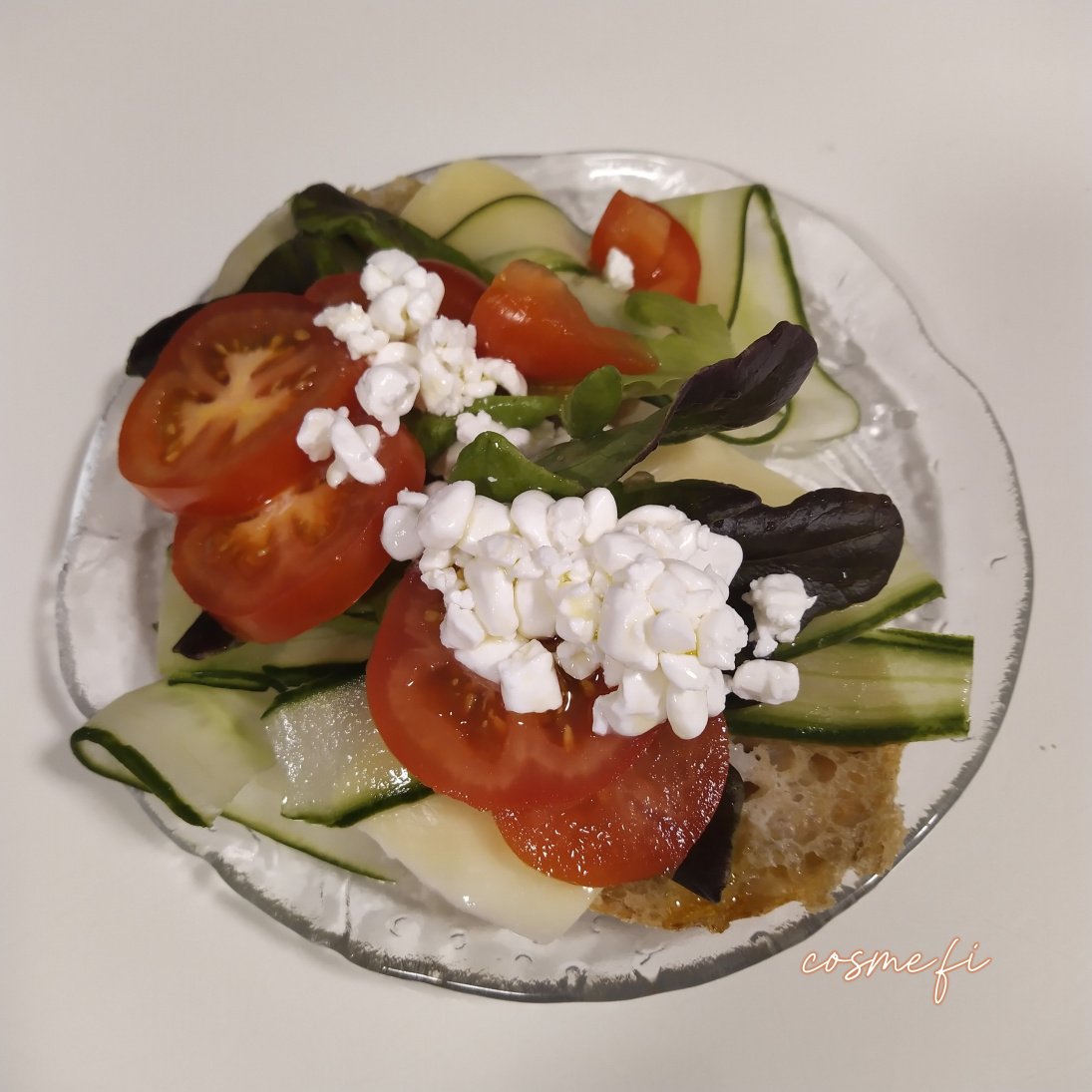
When you notice.
The salt content of a food is obtained by multiplying the total sodium content of the food by 2.548. Sodium occurs in nature mainly as a sodium chloride compound. Sodium is needed in the body for the transmission of nerve impulses, muscle function and the regulation of the body's fluid balance and osmotic pressure. Finns get about twice as much salt from food as recommended. High salt consumption is associated with the development of hypertension. In addition, excessive salt intake causes swelling and kidney dysfunction. Finns get most of their salt from meat products and bread.
Text excerpts: Finnish Food Authority
Use less salt and choose low-salt foods
- Avoid using salt and foods high in salt, especially if your blood pressure is already slightly elevated. The effect of a healthy and varied diet on blood pressure is equivalent to the level of drug treatment.
- The recommended salt intake is less than 5 g/day, which is equivalent to a teaspoon. Finns consume an average of 9.5 g/day of salt for men and 6.9 g/day for women. Salt consumption is strongly linked to the development of hypertension, so it is important to reduce salt intake.
Sodium requirement
- 40% of table salt, sodium chloride, is sodium. Sodium is needed, for example, to regulate the body's fluid balance and for the function of muscles and the nervous system. However, the need for sodium is so low that it is easy to get enough of it even if you do not consume any salt. Many foods naturally contain sodium (including dairy products, meat and fish).
The harms of excess sodium
- The harmful effects of sodium in salt on our bodies are well known. Too much salt binds fluid in the body and causes swelling. It strains the heart, blood vessels and kidneys and is particularly harmful to brain health. High blood pressure and strokes are common diseases in our country. According to population studies, low sodium intake protects against high blood pressure, cardiovascular diseases and stomach cancer.
- Table salt is sodium chloride, 40% of which is sodium. Meat dishes, sausages and cold cuts in particular, as well as cereal products such as bread, are rich in salt. The salt added to food covers more than half of the daily sodium intake. In addition, various spice mixtures, broth preparations and condiments such as soy sauce, mustard and ketchup contain a lot of salt. Foods that are very high in salt include salted nuts, popcorn, herring, some cheeses, cured sausages, cold-smoked fish and meat, and some preserved vegetables, such as olives and pickles.
Oat Roll
Ingredients: water, wheat bread flour, whole grain oats, yeast, and salt
Nutritional content per 100 g:
Energy 933.5 kJ (222.3 kcal)
Fat 2.3 g,
of which saturated fatty acids 0.4 g
Carbohydrates 40.9 g,
of which sugars 0.4 g,
of which lactose 0 g
Dietary fiber 4.0 g
Protein 8.9 g
Salt 1.1 g
Fat-free cottage cheese
Ingredients: pasteurized milk, starter culture, salt, preservative (potassium sorbate).
Nutritional content 100 g:
Energy 295 kJ
Fat 0.2 g
of which saturated 0.1 g
Carbohydrates 1.9 g, of which sugars 1.9 g
Protein 15 g
Salt 0.70 g
Lactose 0 g

