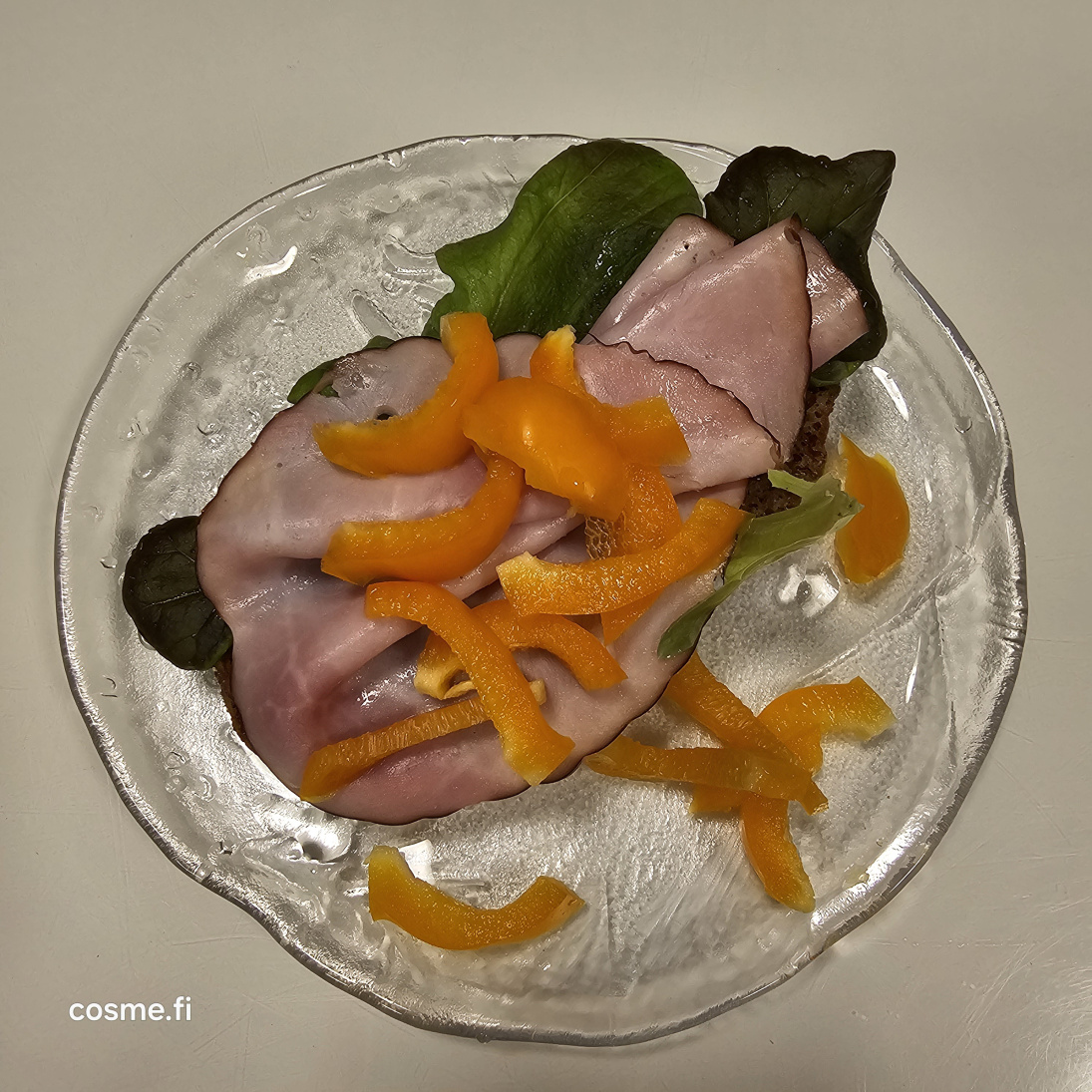
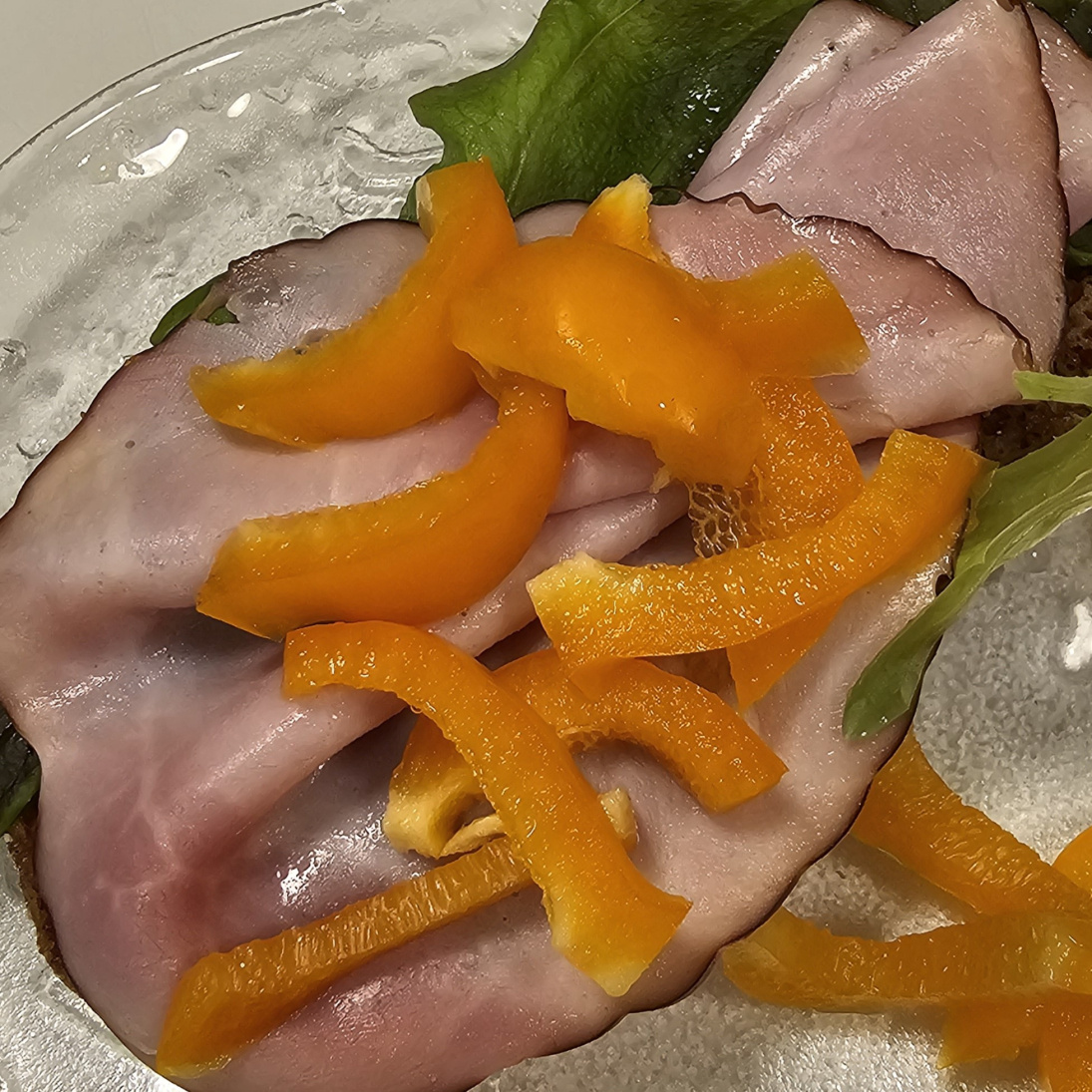
Ham is the part of the pig between the thigh, hip, and hock joint. So, ham can be either with bone or boneless (with the bone removed) and is whole meat (not ground or pressed into pieces, which are also misleadingly called hams), obtained from the pig's hind leg and thigh.
Most often, ham is salted before cooking. There are many ways to salt it: dry curing involves rubbing salt on the surface, injection curing involves injecting a brine solution into the ham, and brine curing means soaking the ham in saltwater.
Typical Finnish whole-meat ham products include Christmas ham, sauna-smoked ham, and boiled ham.
Whole grain rye
Substances that affect gut health support the gut microbiota, digestion, and bowel function.
Fiber is the gut microbiota's most important “fuel.”
Fiber feeds the good bacteria.
Protein is the building material for muscles and tissues.
Some proteins transport important substances in the blood, for example, hemoglobin carries oxygen and transferrin carries iron.
Proteins are also needed for the body's immune system, and if necessary, the body can use them as an energy source.
The body builds proteins from amino acids. It has to get essential amino acids from food.
If protein and other nutrients are too low for a long time, muscle strength and performance can decrease. Immune function and wound healing can also suffer.
Special diets:
- soy-free
- unsweetened
- very low-gluten
- dairy-free
- lactose-free
- low-cholesterol
- low-fat
- very salty
- gluten-free
- egg-free
Domestic smoked ham 100 g:
Energy 434 kJ / 103 kcal
Fat 3.0 g, of which saturated 1.2 g
Carbohydrates 0 g
Dietary fiber 0 g
Protein 19 g
Salt 2.0 g
Lactose 0 g
Domestic rye bread 100 g:
Energy 1049 kJ / 249 kcal
Fat 1.4 g, of which saturated 0.2 g
Carbohydrates 43 g, of which sugars 3.5 g
Fiber 10 g
Protein 11 g
Salt 1.1 g