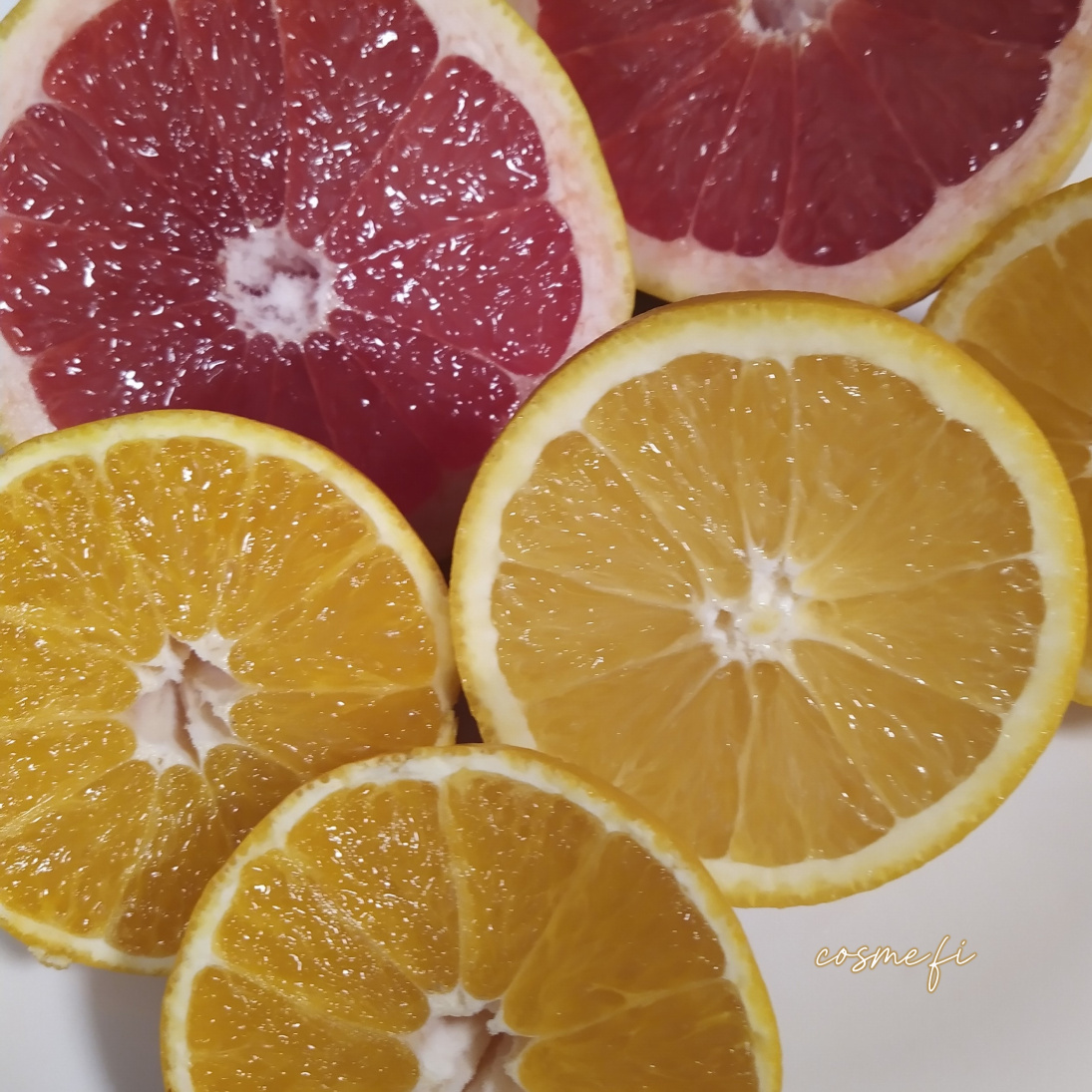
Loads of vitamin C
- You can get your daily vitamin C from just two oranges – unless you pop a sweet Tarocco blood orange. One is enough.
Tarocco has a higher vitamin C content than any other citrus fruit. Other blood and half-blood oranges also contain loads of vitamin C, which the body needs for things like iron absorption and collagen formation. Collagen is important for wound healing, for example.
Fiber from the segments
- Full orange juices can contain as much vitamin C as the orange itself, but when you eat the fruit in segments, you also get more stomach-friendly fiber.
More calcium
- Oranges may also be a favorite fruit for those who avoid milk, as they contain a surprisingly high amount of calcium. One large orange contains almost as much calcium as a 100-ml glass of milk.
A healthy red
- Blood oranges are divided into half-, full- and dark blood oranges. In a semi-blood orange, the flesh is completely or partially red but the juice is yellow. The darkest blood oranges have an almost blackish purple flesh. The color comes from the lycopene and anthocyanins in the oranges. They are also strong antioxidants that, according to research, may protect against cardiovascular disease and prevent inflammation.
Versatile flavor
- The sweetness of a blood orange works in baking and the acidity in cooking.


