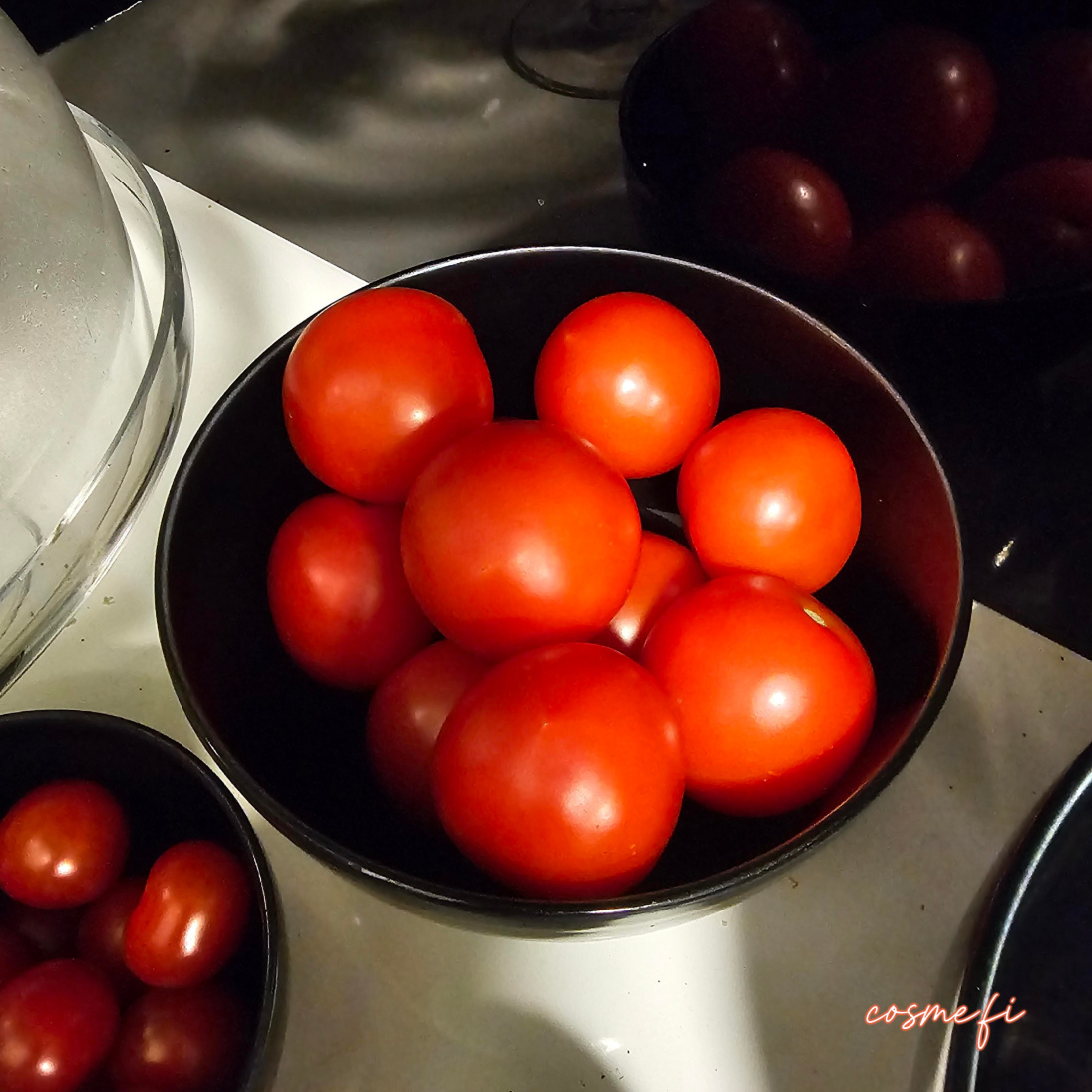
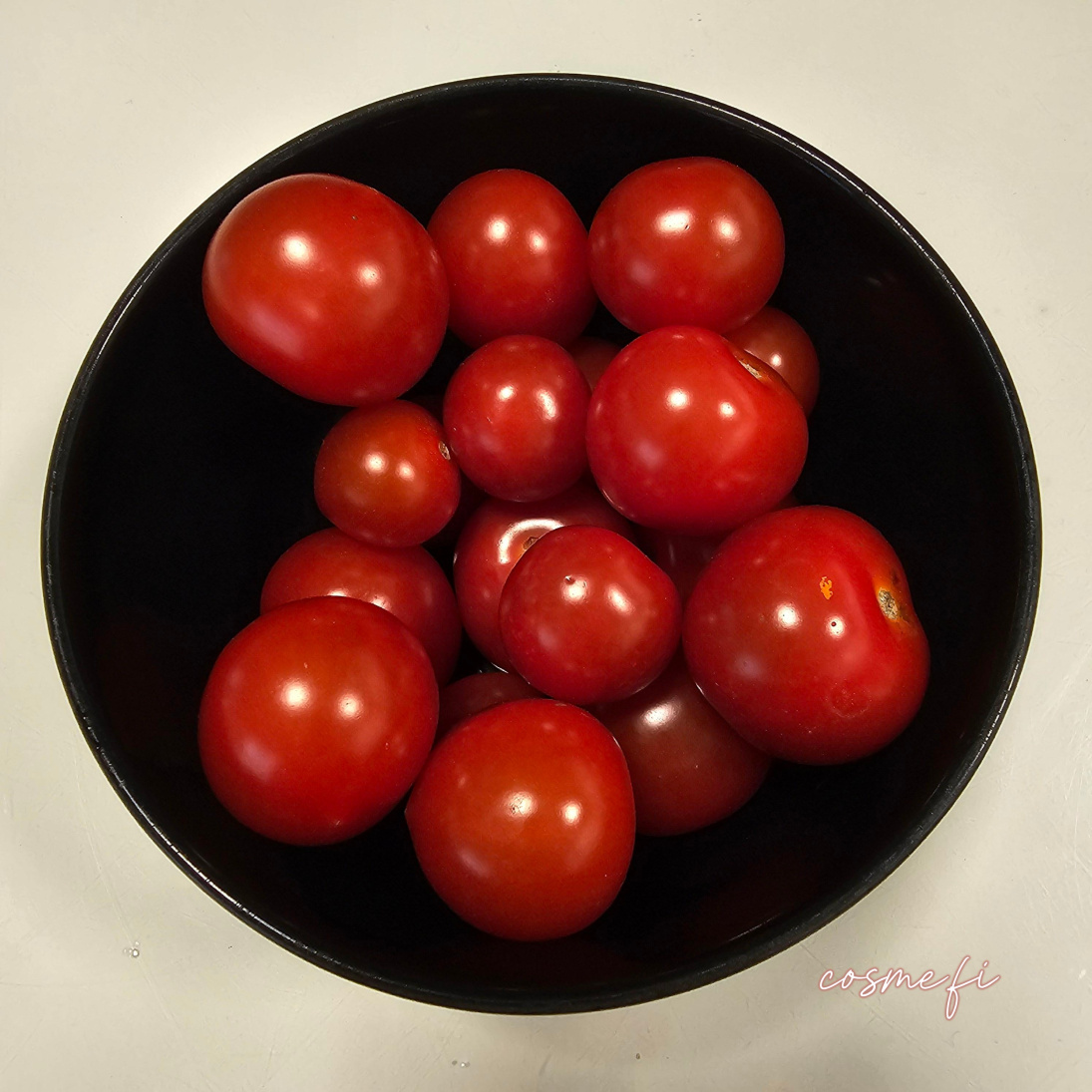


Tomato Nutritional Composition (100 g raw tomato)
Basic nutrients
• Calories: 18 kcal – light and low in energy
• Water: 95% – excellent for hydration
• Protein: 0.9 g – building block for tissues
• Carbohydrates: 3.9 g – energy source, mainly glucose and fructose
• Sugars: 2.6 g – natural sweetness
• Fiber: 1.2 g – supports digestion
• Fat: 0.2 g – low-fat option
Vitamins and minerals
• Vitamin C: About 28% of daily recommendation – boosts immunity
• Vitamin A (beta-carotene): Good for vision and skin
• Vitamin K: Important for blood clotting
• Potassium: Helps regulate blood pressure
• Folate (Vitamin B9): Essential for cell division and during pregnancy
Special mention: Lycopene
Tomatoes are rich in lycopene, a powerful antioxidant that may help reduce inflammation and protect against cardiovascular diseases and certain types of cancer.
Effect of cooking on nutrients
Cooking does not destroy tomato nutrients – in fact, some become more potent.
What happens when tomatoes are cooked?
Lycopene increases
• Lycopene becomes more bioavailable when tomatoes are cooked.
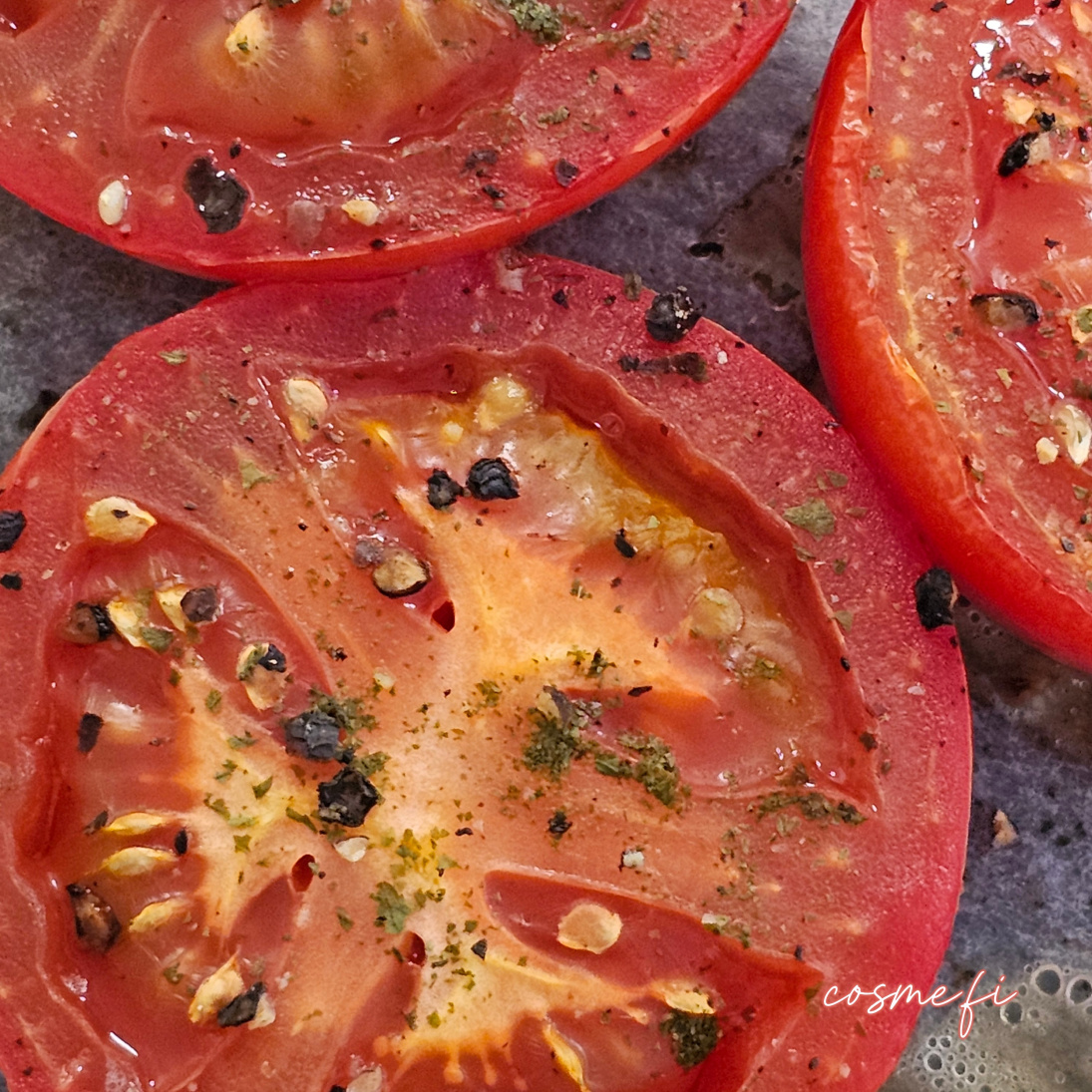
• Tomato sauce, soup, or roasted tomatoes contain lycopene that’s easier for the body to absorb.
• Lycopene may help protect the heart and reduce cancer risk, especially prostate cancer.
Vitamin C decreases
• Vitamin C is sensitive to heat and decreases during cooking.
• Fresh tomatoes are a better source of vitamin C than cooked ones.
Other nutrients remain stable
• Fiber, potassium, and folate are well preserved.
• Cooking can also make tomatoes easier to digest and intensify their flavor
Best strategy: Combine fresh and cooked tomatoes
This way, you benefit from both vitamin C and enhanced lycopene absorption.


