Berries have numerous health benefits. They support, for example, the digestive system and reduce inflammation, and they contain a variety of compounds that are good for health.
Especially all colorful edible berries—orange, red, and particularly blue and purple—are very healthy.
All berries are really good for you because, in addition to fiber, they contain a lot of vitamins such as C, E, and K, as well as folate. If you want to maximize the health benefits of your daily berry serving, it's best to choose dark berries, like blueberries and blackcurrants. Dark berries, in addition to their high vitamin content, are rich in health-promoting polyphenolic compounds.
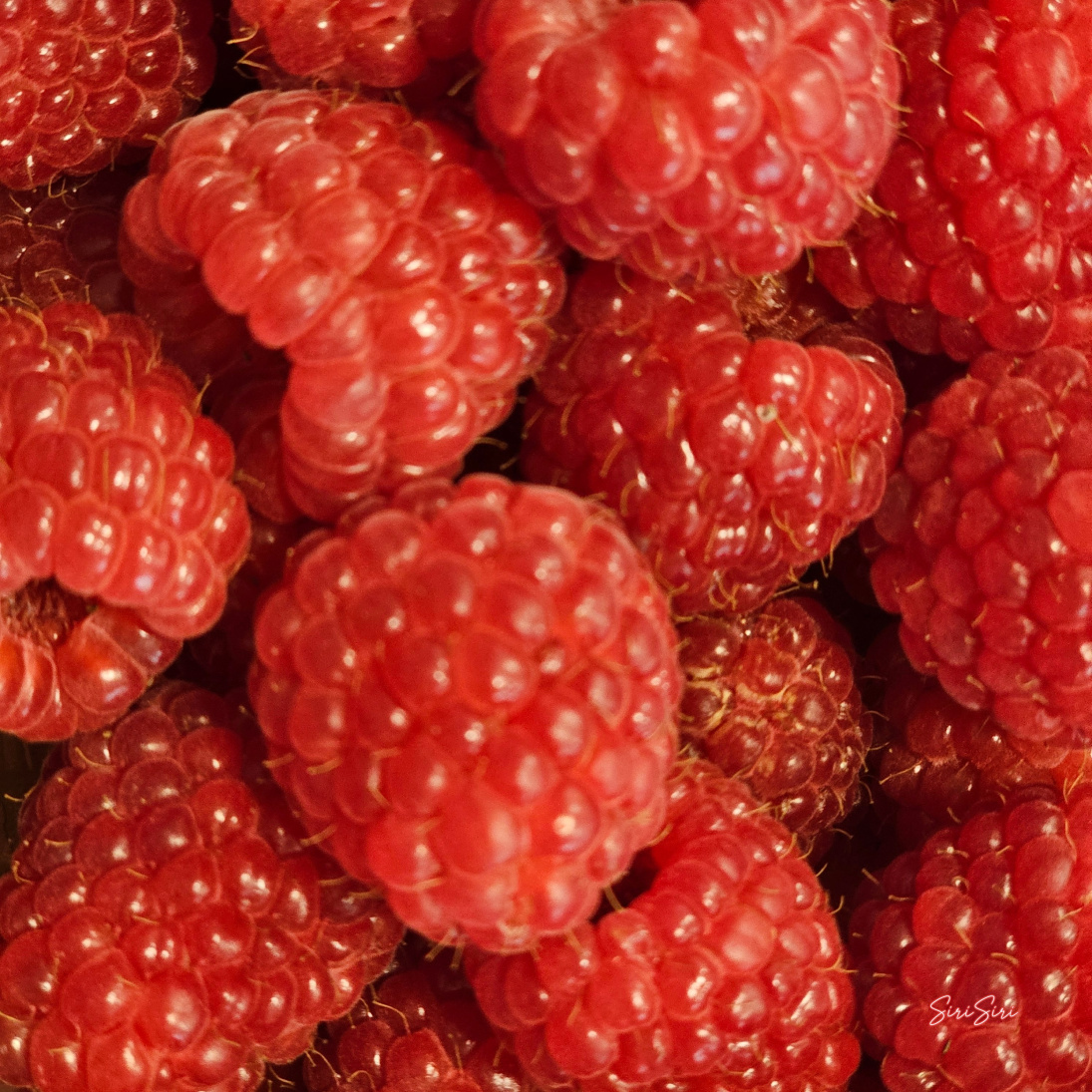
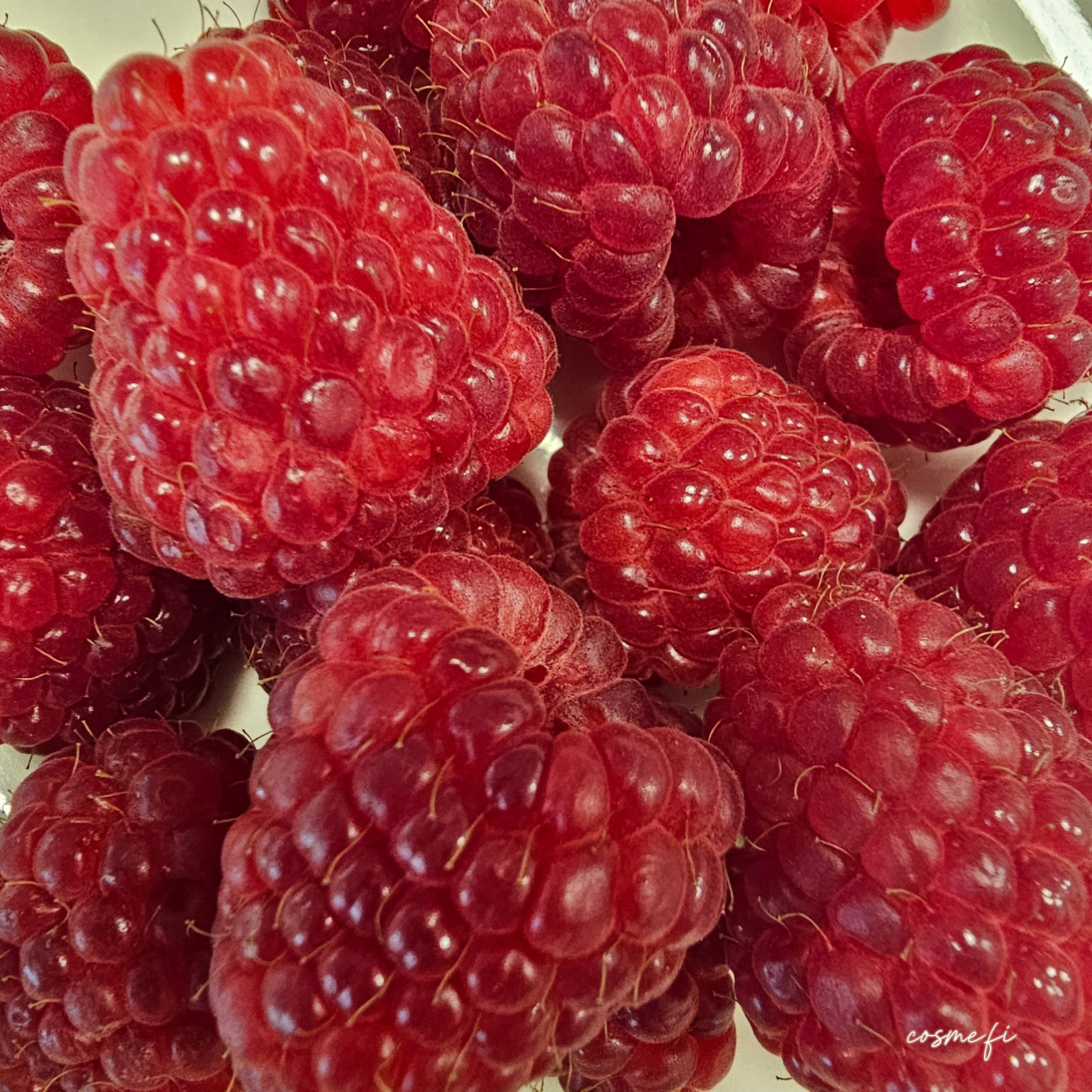
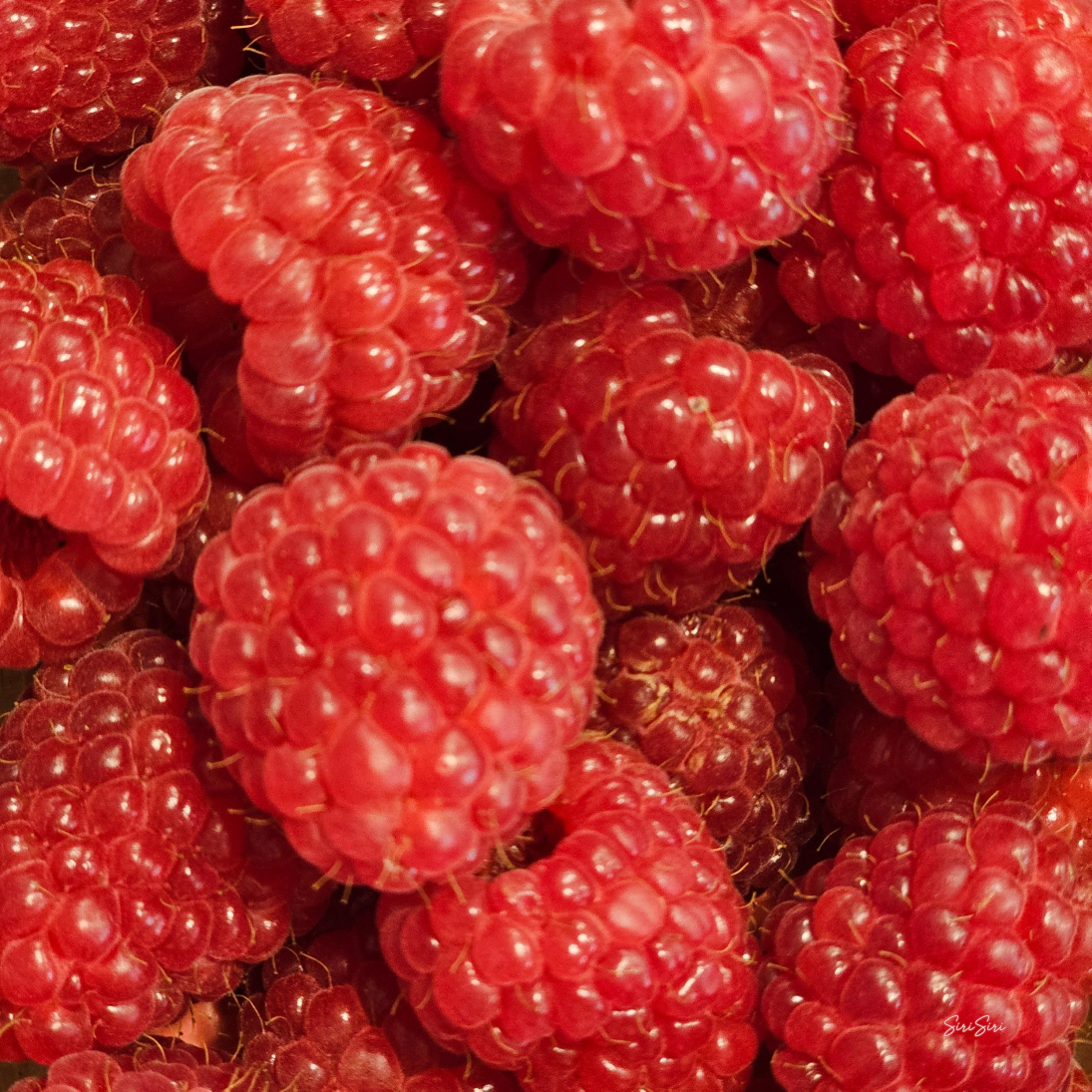
In addition to the raspberry skins and flesh, their seeds are also genuinely healthy.
The seeds contain, for example, polyphenols and fatty acids that are beneficial for health.
Substances that affect gut health support the gut microbiota, digestion, and bowel function.
Fiber is the most important 'fuel' for the gut microbiota.
Fiber feeds good bacteria.
Gut bacteria use polyphenols to their advantage, and they can support the diversity of the microbiota.
Raspberry 100 g:
Nutrient Target
Energy kcal 47.6 kcal 2%
Energy kJ 199.2 kJ
Fat 0.8 g 1%
Saturated 0.0 g 0%
Monounsaturated 0.0 g 0%
Polyunsaturated 0.1 g 1%
Carbohydrate 5.7 g 2%
Sugar 5.3 g 11%
Protein 1.0 g 1%
Salt 0.0 g 0%
Fiber 3.7 g 15%
Organic acids 2.0 g
Vitamin Target
Vitamin A (RAE) 1.1 µg 0%
Thiamine (B1) 0.0 mg 3%
Riboflavin (B2) 0.0 mg 2%
Vitamin B6 0.1 mg 8%
Vitamin B12 0.0 µg 0%
Vitamin C 20.5 mg 27%
Vitamin D 0.0 µg 0%
Vitamin E 0.9 mg 11%
Folate (Vitamin B9) 37.7 µg 13%
Niacin (Vitamin B3) 0.5 mg 4%
Mineral or Trace Element Target
Phosphorus (P) 37.0 mg 6%
Iodine (I) 1.0 µg 1%
Potassium (K) 220.0 mg 7%
Calcium (Ca) 35.0 mg 4%
Copper (Cu) 0.1 mg 13%
Magnesium (Mg) 25.0 mg 9%
Sodium (Na) 2.0 mg
Iron (Fe) 1.1 mg 7%
Selenium (Se) 0.1 µg 0%
Zinc (Zn) 0.4 mg 6%