Pineapple, peeled Ananas comosus
Home Kitchen SiriSiri
Fruits and berries
Root vegetables and vegetables
Vegetable-focused foods and salads
Oils and herbs
Fish and seafood
Meat
Eggs and dairy products
Plant protein
Cereal Products
Baked goods
Potato, pasta, rice
Fruits, berries, purees, jams
Nuts, seeds, dried fruits
Vegetables, legumes, nuts, almond
Dairy products, plant-based drinks, ice creams
Drinks
Disclaimer
The effect of nutrition on our body
What does it mean?
Lehdet
COSME.FI
cosme.fi SiriSiri
COSME for Pleasure
Visits here and there
Aristippos and Descartes
Mietelause
Pineapple
Main Page > The effect of nutrition on our body > Vatsan turvotus
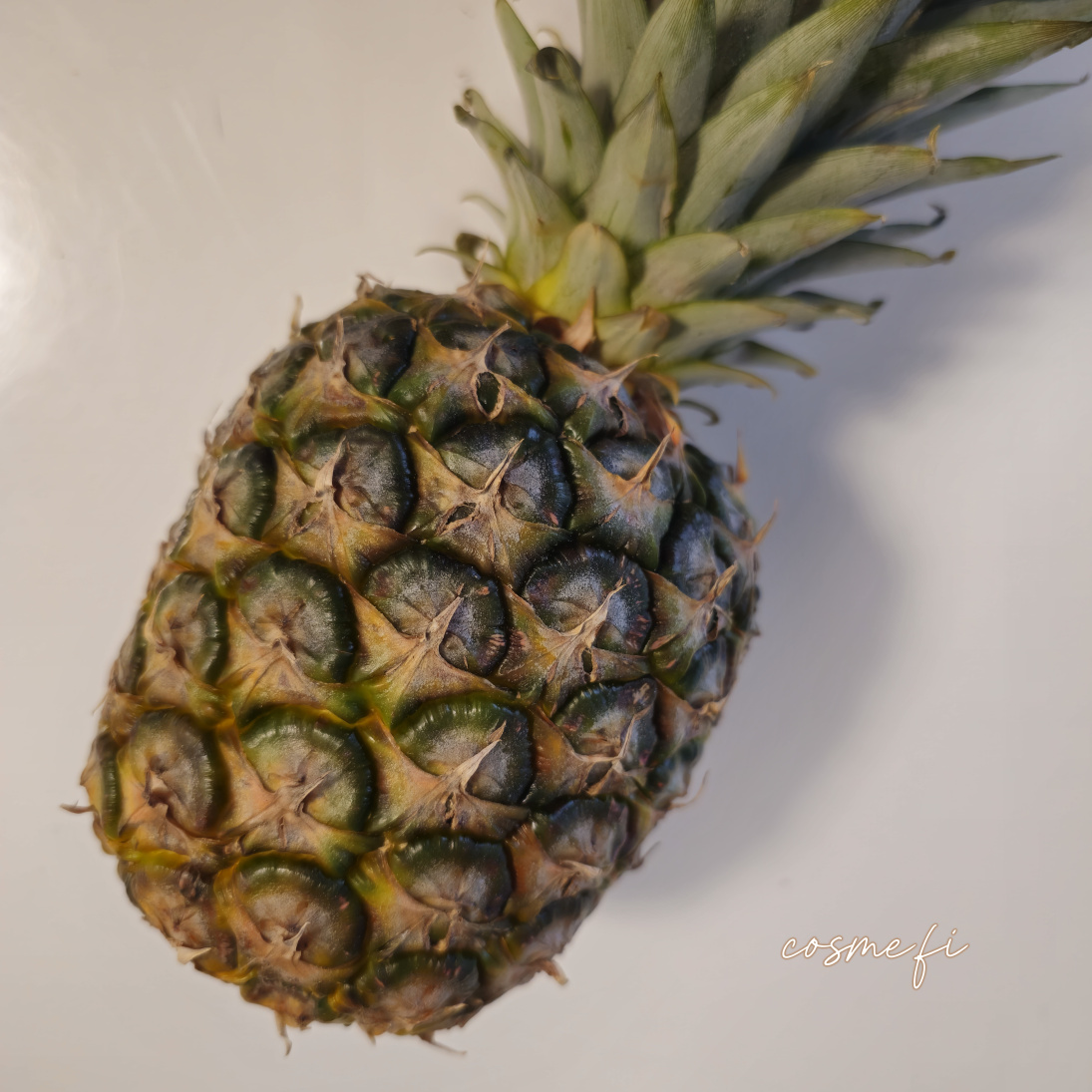
Pineapple.
Fresh pineapple contains about 58 kcal, 14 g of carbohydrates, 1 g of protein, and 0 g of fat per 100 grams, and it is an excellent source of vitamin C and manganese.
Basic nutritional values (100 g of fresh pineapple)
Energy: 58 kcal
Fat: 0 g
Carbohydrates: 14 g
Protein: 1 g
- Dietary fiber: abundant, promotes satiety and intestinal function
- Vitamin C: very good source, one cup of pineapple pieces covers about 131% of the daily requirement
- Manganese: good source, one cup covers about 76% of the daily requirement
- Pineapple contains the enzyme bromelain, which supports digestion and may relieve bloating and heartburn. Bromelain also has anti-inflammatory and pain-reducing effects.
- Diuretic effect helps remove fluid from the body and reduces swelling.
The benefits of pineapple are undeniable, but it should also be eaten in moderation. Bromelain is mainly an enzyme that tenderizes meat, meaning it aids the digestion of tough foods. Excessive consumption of pineapple can lead to its bromelain also starting to soften your lips, gums, or tongue. Overdoses of bromelain and vitamin C can lead to vomiting, diarrhea, headaches, and nausea.
Pineapple, for example, in addition to regulating cortisol production, contains bromelain, an enzyme that helps break down protein to aid digestion and reduce bloating.
Pineapple 200 g:
Nutrient Goal
Energy kcal 116.0 kcal 6 %
Energy kJ 485.5 kJ
Fat 0.0 g 0 %
Saturated 0.0 g 0 %
Carbohydrate 28.0 g 12 %
Sugar 26.0 g 52 %
Protein 1.2 g 1 %
Salt 0.1 g 2 %

